Monday, 19 August 2013

First thoughts as to where VCS are in relation to LEPs - August 2013. What is the VCS offer?

Background
LEPs were established to develop a local growth agenda, locally driven by businesses that had a buy-in to a distinct geography, supported by Local Authorities and other influential institutions, FE Colleges and Universities. LEPs developed strategic plans, recognised skills deficiency and suggested ameliorative processes to enhance their growth programme.
This was all fine and dandy, with government programmes being routed through the process, focusing such activity through the development plans, business plans being reviewed and evaluated with a business eye, and then along comes Europe!  
In November 2012 after some deliberation, but coming as no surprise to those who had read Lord Heseltine’s report ‘No Stone Unturned’, The Department for Business, Innovation & Skills (BIS) announced that the EU Structural Funds 2014 -2020 were to be directed through the LEPs.
While they waited for the initial guidance which eventually arrived in April and July 2013, LEPs went about their business, merrily developing their strategic plans within their initial structures, business orientated growth programmes targeting, predominantly, private sector enterprise, acknowledging the growing sound bites that it was the private sector, and not the public sector, that creates the wealth.
LEP and VCS engagement – a stalled start
In their initial development LEPs had little, and in some cases, no contact with Voluntary and Community Sector (VCS) organisations. From November 2012 there was an increased flurry of activity by some LEPs with VCS organisations as they began to discuss how LEPs and the Sector could benefit each other.
What didn’t help matters was the variety of names and terminology used to describe the activities of VCS organisations:
·         Civic Society
·         Civil Society
·         The Third Sector
·         Non Government Organisations (NGOs)
·         The Voluntary Sector
·         Social Enterprises
·         Charities
·         Community groups
Adding to the confusion of titles was the variety of perceptions of where the Sector gets its money from.
Some basic statistics
 VCS organisations constitute an important sector of the economy, creating jobs and economic value, as well as social and environmental benefits.   According to research by the National Council for Voluntary Organisations (NCVO), there are over 162,000 voluntary organisations in the UK.  These organisations employ 793,000 people (around 2.7% of the UK workforce), and additionally they spend around £18.1bn on goods and services each year. At the same time there are over 60,000 social enterprises in the UK, and 5,950 co-operatives employing 230,000 people. 
LEPs and Europe
With the announcement that LEPs were to ‘oversee’ the 2014-2020 structural funds, LEPs had to begin to accommodate new concepts and partnerships in order to deliver EU programmes.
Whilst ESF and ERDF were known programmes, terms like social inclusion, social innovation, community lead local development were unfamiliar. These concepts were to be accommodated into new strategic plans that would outline how the LEP would deliver a European funded programme, and so consultation began.     
LEP and VCS engagement – a second bite  
While an LEP is capable of delivering economic growth, it will be necessary for it to develop strategic partnerships with VCS organisations in order to fulfil, not only EU requirements, but also to enable them to deliver a growth agenda that accommodated the socio-, as well as the economic, growth agenda.
In some cases, the LEP journey of partnership with VCS was easier than in others - some sought out partnerships, some had partnerships within their existing agenda, and others continued without any partnership plans.
Those LEPs that recognised the importance of an ‘inclusive economic growth’ programme have recognised that the delivery of any growth agenda requires the engagement of those furthest from the labour market, people who, for whatever reason, take longer to become, or in some cases cannot fully become, economically active, and are continually excluded from accepted ‘norms’ and mainstream activity. For this engagement to be achieved, community lead organisations need to be involved.
LEP and VCS – issues to be addressed confusions to be clarified
The most common prejudice faced by the sector in any engagement is the focus on the charitable aspect of the sector, and not on the business aspect. There is often a misguided view that organisations receive grants to deliver to those in need. Much less is known or appreciated of the new commissioning and procurement aspects of public services, and the sometimes onerous open tendering process which organisations need to go through to win contracts, even small ones. 
The concept of ‘Social Enterprise’ was often confused with ‘charitable’ delivery and, therefore, in some cases, ignored. There is evidence throughout the country, through information sharing at VCS network meetings, of sparse appreciation of the activity and role of the VCS.
This ignorance or lack of appreciation has prevented significant partnerships being developed, and while the role of LEPs was purely economic growth, stimulated only by the private sector, the management of European Structural Funds brings wider responsibilities.
The most successful LEPs and VCS partnerships occur where there is a historical connection between local and regional infrastructure organisations and the current European Management processes in Local Management Groups.  
What therefore does the sector bring to LEPs?
While there is little argument that local, regional and national economic growth policies are a necessity, where such activity can be lead by business, it can be supported by public sector funding. However, the lack of penetration and engagement of public sector programmes has consistently failed to engage a certain percentage of the population. Whatever title we give this, or these groups, (for they are not a homogeneous community, geographically, culturally or socially), if we are to develop a fully integrated socio-economic growth programme, they must be engaged to their fullest potential, and at a pace that maintains and sustains their engagement.
 We cannot assume that all individuals are capable of full time employment within the labour market. Are then these economically excluded individuals not to be included in mainstream developments and provision, or just managed/cared for, within other provision?
Are we to ‘lump’ all these people together or, building on the concept of the individual, develop communities of geography or interest, with civic activities that can include the individuals, starting the journey from their own specific capability and journeying, at their own pace, arriving at a destination with which they are comfortable?
What the VCS offers the LEPs is access to such groups, and the ability to engage them in relevant, developmental and sustainable programmes that will engage them, over a period of time, in the socio-economic development of an area.
There is significant evidence throughout the country where community and civically lead programmes have stimulated local engagement in economic regeneration and growth activity. Social innovation programmes can develop a social economy, and can generate sustainable activities that can accommodate developments which facilitate the necessary engagement outlined above.
This process is not one of ‘charity and care’, ‘handouts and management’, but one of business, humanity, and compassion, with an understanding of the individual’s journey, place and circumstances, and an appreciation of the economy, targets and their achievement capability, matched to a support programme to accomplish set and agreed targets and activities.

Ted Ryan
Policy Associate, RAWM
Strategic Development Director, RnR Organisation
©August 2013 

Wednesday, 31 July 2013

Digbeth – a possible focus for Community Led Local Delivery

The European Union Structural Fund guidance from the commission and BIS outlines the use of Community Led Local Development (CLLD) as a method of addressing challenges identified within a specific geographic community.
Developed in rural areas as the LEADER programme, its use has now been widened to include Urban areas.
This proposal explores the possibility of promoting the Social Enterprise Network within Digbeth, Cheapside and Highgate as a CLLD.

THE AREA
Digbeth, Cheapside and Highgate contain a large number of Social Enterprises as well as some of the most deprived communities within the Greater Birmingham LEP.  
The population of the area is about 10 -12,000
Developing a Local Action Group (LAG) within this area will build on, and develop, a number of current initiatives.  The Social Enterprise Network, a vibrant residents association that is already engaged in community action and economic development activity, as well as venues that address social inclusion issues for residents, including young people, within the area, will enhance the LAG’s ability to deliver and develop socially innovative and inclusive responses to issues that can be replicated across the area.
Social Enterprises, Private and Public Sector as well as community groups already co-exist within the area, with an economic interdependence that is unprecedented in Birmingham. Developing a CLLD within this area will enable the vibrant economic activity and relationship to become more productive and dynamic.  

THE OUTLINE ACTIVITY
Developing a LAG’s Local Development strategy to address the following;

Challenges to be addressed – Youth and enterprise, Low skills and lack of entrepreneurship within the area, social innovation activity to challenge social and employment exclusion.

Target groups to be supported – Young people, long term low skilled individuals and business start ups; social enterprises.

Thematic objectives likely to be covered    TBC
European Social Fund can be used to develop a skills agenda and programme.
European Regional Development Fund can be utilised for business support and potential asset transfer activity. 

Links to other initiatives
Neighbourhood Budgeting and management; Birmingham City Council

LOCAL ACTION GROUP (suggestion)
·         Social Enterprise Network (Hub) covers all SE and VCS organisations
·         Digbeth Residents Association
·         Highgate Residents Association
·         City and South Birmingham College
·         Cultural Organisations (Friction Arts)
·         Business Representatives (Custard Factory, National Express) 

Ted Ryan July 2013 

Monday, 8 July 2013

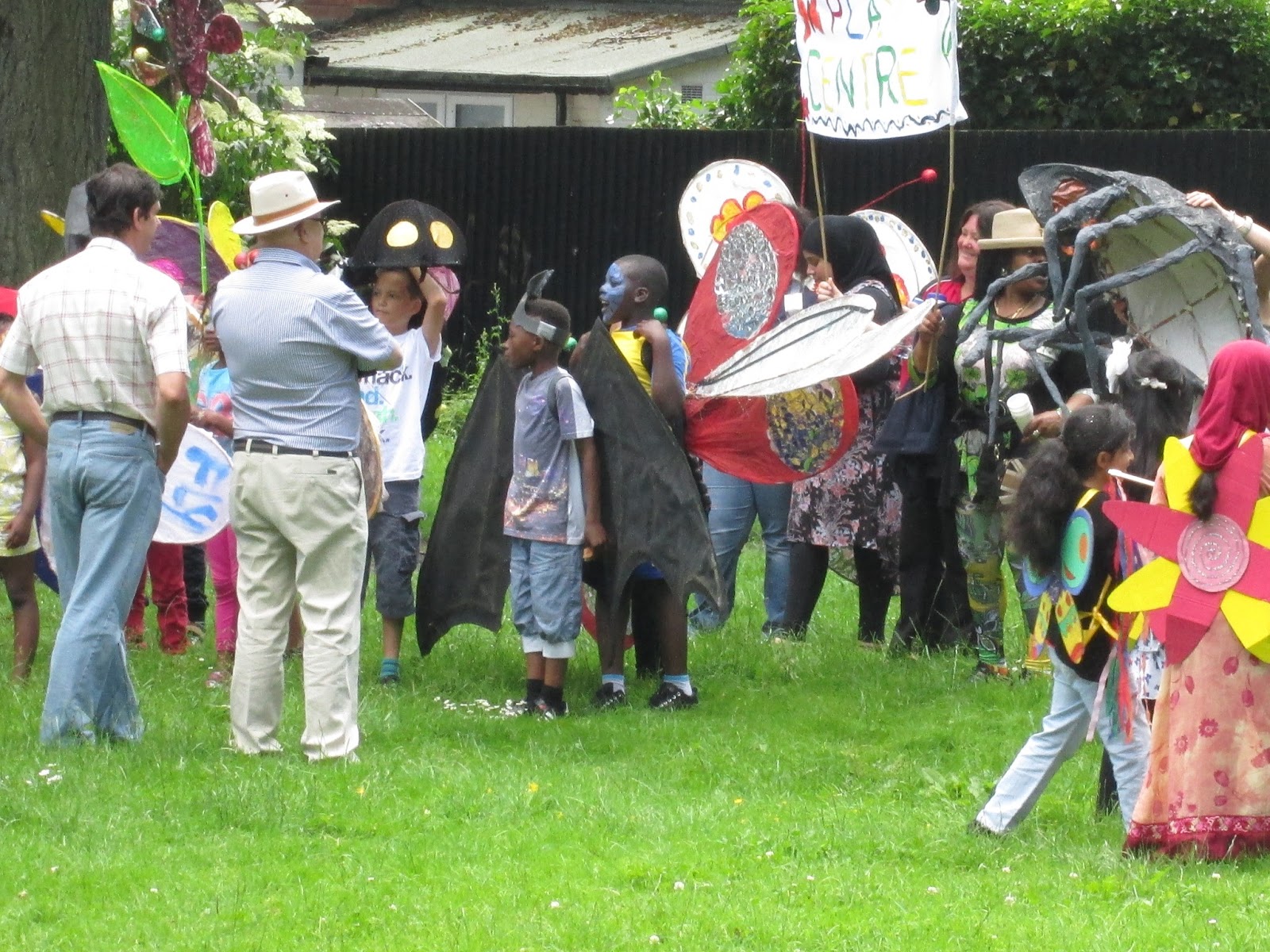
Balsall Heath Carnival


Butterflies, Bees, Bugs and Blooms 

and people and sunshine... a plenty 

What a great day and well done to everyone who took part 


Marshals getting ready 

Marshals still getting ready 

Balsall Heath Historical Society arrive 

with 'friends' 

Greeted by Val 

Waiting for the Judges 


Activities in the park 

Activities in the park 

Activities in the park 

Activities in the park 

Activities in the park 

Activities in the park 


Activities in the park 

Activities in the park


Thursday, 20 June 2013

Art, design, engineering, Lego and Education

A teacher at my nephew’s school described a series of drawing he had done as ‘drawings of my childhood toys’. He did not follow her guidance and titled the work ‘my hobbies’. The drawings were of Lego statues he had designed and made, he had designed one online and the design was made and sent to him by Lego.
To the teacher I say this is how to discourage engineers and designers, to my nephew I say keep at it and go for it.
This is art, design, engineering and Lego  - this is Civil Engineering

From the BBC website 


The world's biggest display of Lego art is taking place at Discovery Times Square in New York. The Art of the Brick features more than 100 works of art created from millions of toy Lego bricks by sculpture Nathan Sawaya. They include Yellow (bottom left), Skulls (top left) and Swimmer (right). The exhibition runs until January 2014.

Sunday, 16 June 2013

Community Development, Green Spaces & Local People,

LOCAL PEOPLE GREEN SPACES
A COMMUNITY DEVELOPMENT MODEL


The purpose of this blog is to explore the engagement of  communities in the development and management of activities within green and open spaces within their neighbourhoods.

1.  Some parameter definitions.
Development – encouraging individuals within communities adjacent, or nearby, green or open spaces, to become involved in the development of activities that engages other community members to be more active in the green and open space.
Management – in the co-production of maintenance and activities, linked to development, utilising the skill and interest of participants. It does not entail the transfer of overall management responsibility from the council, but may entail communities taking responsibility for specific projects.
2.  Development of activities
The majority of our open spaces within Sparkbrook are used as they were intended to be used, on an informal recreational basis as meeting spaces, play spaces and, when weather permits, just spaces for sitting and relaxing in.
Within the informal activity is an element of organisation - people walk around the parks, arrange to play football or cricket, and there is an embryonic trend whereby community groups run more formal, organised activities.
‘Friends of’ organisations have arranged social and cultural activities, or family events, to encourage greater, and different, use of the space.  The overall aim of all these activities is to foster greater utilisation and appreciation of the space and its diversity.
There is the potential to develop community engagement through structured and semi-structured leisure and recreational activities, providing a focal point for existing, local, community groups, residents associations, ‘Friends of’ parks groups, and encouraging other individuals to become involved in activities.
Building on the current engagement of local people in green and open spaces, these developments can be divided into three distinct, yet interlinked categories.
·         Exercise
·         Horticulture
·         Cultural  - celebratory, fun and artistic

3.  Exercise
Building on, and not wishing to formalise, current activities, local groups should be encouraged to explore how they can become involved in developing the green and open spaces as areas for formal and informal exercise.
Examples could include exploring the development of walking groups, for all ages and abilities, cycling (co-existing with and not dominating other users) and other forms of outdoor exercise. Routes and activities could also be developed in partnership with groups, as well as offering training to individuals, from specific elements of the community, to become champions of exercise.
NB - While community champions are a necessity if local people are to be engaged, there needs to be formal structural agreements, liability cover and training for people who are willing to develop such activities. Community Sports Leaders qualification, or equivalent, could be explored with community groups being provided with appropriate cover in developing such activities.
Other examples would be supporting local team games, enriching, rather than developing, the growing local, formal, activity that takes place within the parks. The organisations which organise these activities have grown up independently, and therefore require the Council, or other partnership bodies, to act as supporters and allies, rather than as organisers. Discussion needs to take place concerning the support that such groups require to continue. The pace of development should be lead and guided by the group and their requirements, and not by a formalisation process that fits the Council and other Governing body processes.
4.  Horticulture
The maintenance of the infrastructure (grass, trees, swings, paths, current benches and bins, other furniture) should remain the responsibility of the Council. Some of this responsibility is under long term contract with Quadron, and other responsibilities are undertaken on an apparently ad hoc basis with no perceivable, or shared, strategic maintenance plans. In the current financial climate this is not going to improve and, while overall responsibility and liability for facilities should remain with the Council, local groups could play a greater part in the development of facilities and resources.
There are a significant number of houses within the ward that have very small gardens / back yards, and there is indication that some people would take advantage of gardening projects that utilised space within public parks. Developing gardening activities as a co-production activity with Friends organisations, or other community groups or fora, could augment the more strenuous activity proposed under the ‘Exercise’ heading, as well as providing structured community engagement in the open and green spaces.
Tree bush and fence planting, building and maintaining planters or flower beds can become a constructive activity, through which members of the community can be engaged through the appropriate community group.
In such development, it would be essential to engage not only Council officers, but also the maintenance contractors. This will ensure that any developments are undertaken with the agreement and knowledge of all parties, while appreciating the impact on the maintenance contract. (The majority of funding bodies that would provide funding for such activities insist that the owner of the land or asset has agreed to the development).
5.  Cultural
This is the largest category as it includes:
·         Family fun – picnics, play, swings and slides,
·         Events – cultural celebrations, performances, fun days and community events.
This is potentially the most expensive category, both from a capital and from a one off event perspective. 
Events provide organisations with the opportunity to develop activities that attracts as wide a range of the local community as possible, activities that may lead to greater participation in ‘formal’ activity.
Capital equipment, swings, climbing frames, etc. encourage families to come to parks. In the current economic environment the maintenance and replacement / improvement of this equipment must remain with the Council but budgets are tight. Picnic tables, benches also attract people into parks – the development, maintenance and replacement of this equipment is also in jeopardy, given the Council’s financial constraints.


6.  Potential Community Partners
In developing this draft model in the Sparkbrook Ward  the following partners can be targeted – this is not an exclusive list and can be added to as green spaces and organisations are identified.
i.         Parks                                  Balsall Heath Park
Farm Park
Pickwick Park
Park by Nelson Mandela
Memorial Park – Taunton Road

ii.        ‘Friends of Parks’              Balsall Heath Park
                                                Farm Park

iii.       Fora                                   Balsall Heath Forum
Sparkhill Forum
Sparkhill North Forum

iv.       Residents Associations

v.         Schools     


7.  Action Points

a)    Complete section # identifying Potential Community partners; call meeting - hosted by Local Councillor, if not Councillor then who?
b)   Identify Potential public sector  / departmental partners.
Access to budgets / project funding or support.
c)    Identify Green spaces within ward
d)   Develop individual green space plan that can be accommodated into a ward / district process. Focusing on the three categories above.
e)   Identify development process and group activities and finance programme for activity - 


Ted Ryan is currently chair of the Friends of Balsall Heath Park and has worked for over 30 years on community lead projects. He has recently managed a capital and capacity building project on behalf of the Friends of SARA Park 

 Ted Ryan June 2013

Wednesday, 24 April 2013

Schools - the battlefield in the socio economic war

Schools – the constant battlefield in the socio – economic war

With the governments drive for standards being clouded by the insistence that the role of education is to prepare young people for the world of work schools are yet again thrown into the maelstrom of defining education for social or economic purposes.

Ironically, in the early part of this century at the heart of both arguments is now the quality of the learner and the learning experience. 
While basic English and maths is becoming a given the content and regurgitation driven education so beloved of our processors is diminishing with the ‘social’ skills of problem solving, team work, responsibility for actions, adaptability and so on becoming a prominent clarion cry for reformers who believe education should provide labour market ready ‘product.’

The irony of this lies in the basic premise of educators, and good teachers are educators, that the basic skills for learners can be boiled down to three components:
  • ·        Language, in our case English, as well as a second or third language, enabling you to communicate your ideas and learning.
  • ·        Maths (or physics) to appreciate logic and reasoning, system and processes, not just number crunching
  • ·        Learning itself, the research, analysis, sharing, problem solving, modifying, stretching and accommodating etc....

Within the last premise other subjects can appear but not as content; facts, dates, deaths, names and finally regurgitation to accommodate some abstract measuring criteria.

The skills for the future lie within these three basic premises, not measuring the content of learning or what additional skills a young person should have.

In the 21st century we may have the opportunity, utilising the technology, brilliance of educators and the desire of young people to learn, to address the question of “what is education for?” in a far more democratic way than ever before. 

Democratic, not because politicians say it is, but because learners have access to more information than ever before.
People travelling in ‘learning’ directions that institutions may not have thought of and need to accommodate, researching their own interests, problem solving, innovating and sharing beyond the confines of school and college walls.
They will develop learning and employment skills simultaneously hopefully within a system that accommodates this form of learning.

Then all we need to do is develop a process to measure them, or do we? 

Monday, 15 April 2013

Hillsborough

Hillsborough – 96 catastrophes caused by institutional "multiple failures" (cock up) followed by institutional cover up. 
Concerns had been expressed over Hillsborough since 1981 when similar instances , but with no fatalities, had occurred.
It is now believed that up to 41 of the 96 who perished might have survived if the response to the disaster had been different.
164 witness statements had been altered and 116 statements unfavourable to South Yorkshire Police had been removed. 

It was identified by the independent enquiry that the then Conservative MP for Sheffield Hallam, the late Irvine Patnick, passed inaccurate and untrue information from the police to the press thereby influencing one of the most infamous headlines in history 


It is now understood that South Yorkshire Police had performed blood alcohol tests on the victims, some of them children, and ran computer checks to impugn their reputation. They were of course Liverpool fans and had caused the Heysel Stadium disaster, they must be in the wrong.
How wrong they were.


http://hillsborough.independent.gov.uk/